
Posted on 8th December 2025

Education Partnership Spotlight: Eat the Earth – a Student’s Recipe for Change

University of York student Maisie Clegg’s love for cooking and her drive to live more sustainably came together in Eat with the Earth – an as-live cookery show where every choice, on and off screen, was designed with the planet in mind.

What started as an interest in theatre soon grew into a passion for film and TV, and Maisie’s freelance work on set gave her a front-row seat to the industry’s less glamorous side: the waste. So, when the chance came to pitch her own idea for a TV show, Maisie served up something different.

“Being on set is amazing, but I also saw the dark side of it – how wasteful it can be. From transport, to props that never get used, to huge amounts of food thrown away. It made me realise how much needed to change.”
This realisation paired well with the opportunity to undertake the albert Education Partnership module at the University of York, which then led to a climate content pitch as part of her fourth assessment for the module . Maisie’s idea blended two of her growing interests: content production and sustainable living. At the time, she was also studying a “Future of Food” module, exploring the supply chain from farms to consumers, and how climate change is impacting this process.

“I’d always been into cooking at uni, and I was thinking a lot about the small differences I could make in how I consumed things,” she says. “So, the idea for a sustainable cookery show just clicked.”

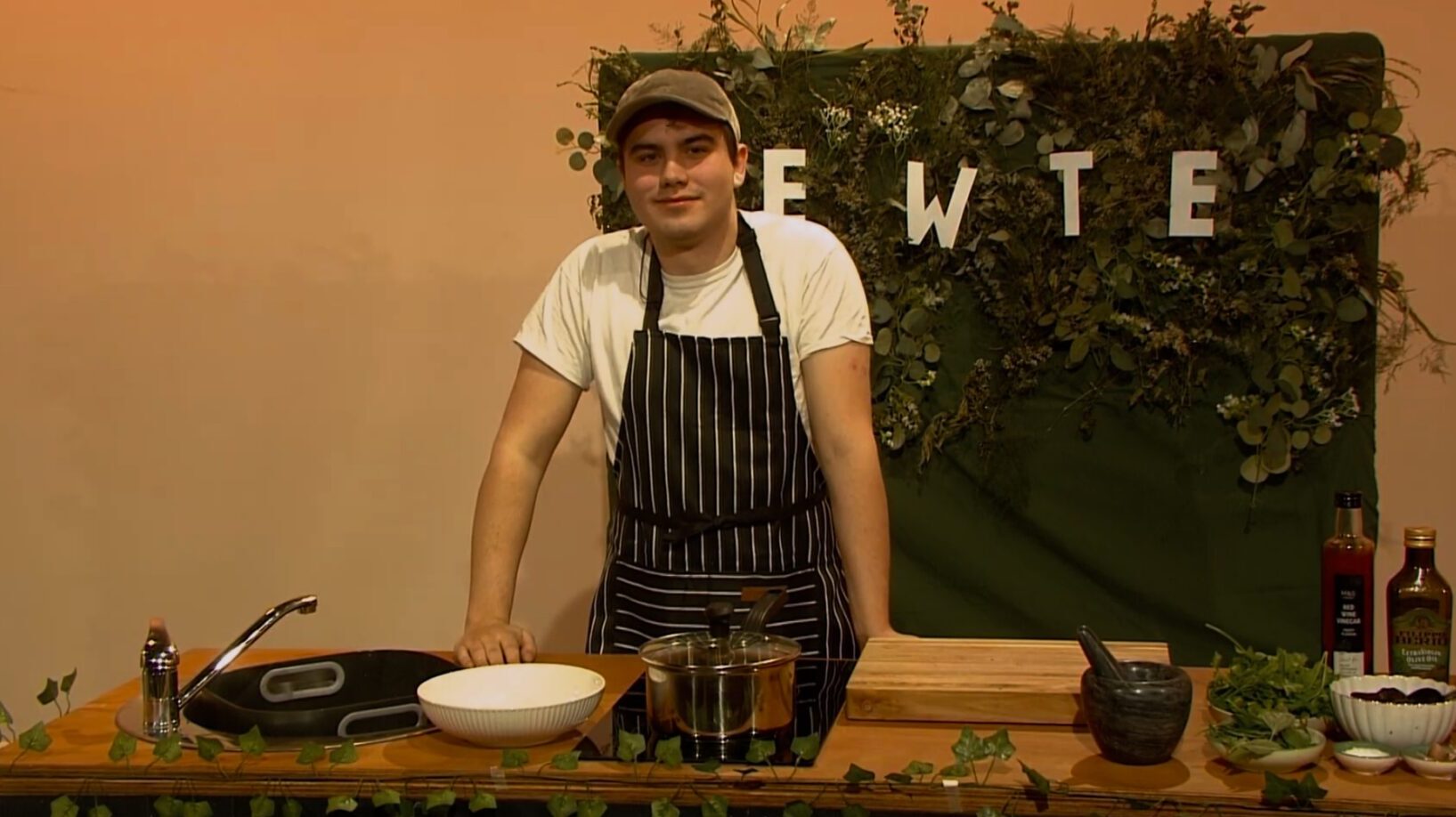
The result was Eat with the Earth, an as-live studio programme styled after Saturday morning favourites. The eight-minute segment featured recipes built around local, seasonal produce, and aimed to present these alongside interviews with scientists and environmentalists.

“Some viewers might just tune in for the recipes, but without realising it they’d be making good swaps – like choosing seasonal ingredients. The show was designed to make sustainable choices easy, accessible, and fun.”

Maisie sourced props and set materials second-hand from Facebook Marketplace and the university’s own stores. She borrowed unused scenic backdrops from workshops, repurposed a ripped bed sheet for a green backdrop, and even salvaged foliage from a local wedding which she’d worked at to create an earthy, plant-filled studio set.

“It was so nice to give things a second life,” she says. “That foliage was just going to be thrown away, and instead it became part of the show’s identity.”

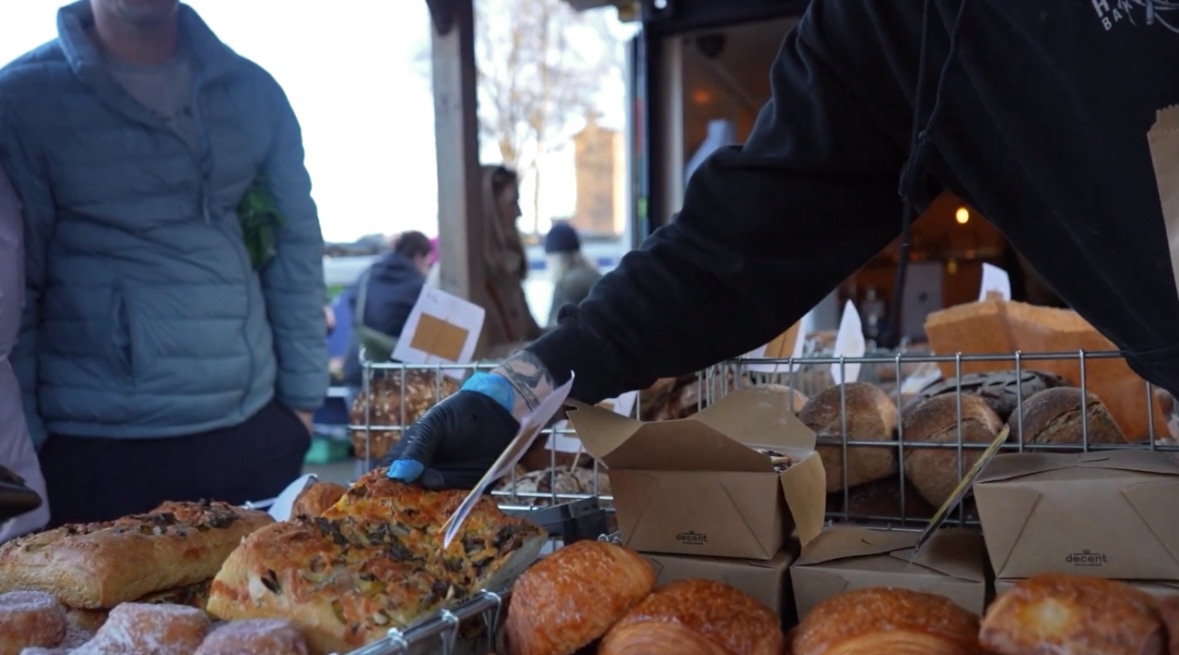
Transport was another key area. Maisie filmed a VT at Food Circle CIC farmers’ market in York and all guests were locally based, keeping travel emissions minimal. Crew members were encouraged to walk or take public transport whenever possible. This decision was inspired by access to the albert toolkit and footprint tool, which allowed Maisie to see the impact travel can have on a production’s carbon emissions.

The experience proved to her that sustainable production doesn’t have to be complicated or costly – it can be creative. “Just having that awareness made me think differently,” Maisie reflects. “And it rubbed off on the crew too. Some of them hadn’t thought about these things before.”

For Maisie, the project reinforced her belief that sustainability should be embedded in every stage of screen production. She’s since taken what she learned into her freelance roles, raising the topic with colleagues on other sets. “I’m not trying to force anything,” she explains, “but I’ll bring it up…even small shifts make a difference.”

Looking ahead, Maisie hopes to continue combining her passions for production and sustainability both in her dissertation research and future work . “It’d be great to work in a role where I can champion these ideas on set,” she says. “For me, it’s about making sustainable choices the default, not the exception.”