
At Arts University Bournemouth, the Skills for a Sustainable Screen Industries module offered as the backbone of the BAFTA albert Education Partnership, isn’t just used across their film production course, but also across the Design for Costume and Performance BA. ‘All our students do a sustainability statement with every unit,’ Adele Keeley, Senior Lecturer at AUB, explains. ‘So, when we started working with albert it was quite intuitive to bring it straight in’. With that initial understanding of sustainability in everything the students do (not just an add on), the first two assessments in the albert module focusing on climate science and understanding personal impacts, naturally slotted into the course.
Posted on 8th December 2025
Education Partnership Spotlight: History Walkers, Sustainable Designing and Conversations Through Clothing – the albert Module Adapted for Costume Students
Then, in the final unit of the course’s second year, costume students complete a technical file that prepares them for their third year of study and beyond around professional development and industry learning. ‘One of the things they do as part of their file is the carbon calculator,’ Adele explains, referencing the exclusive access to the student toolkit and production carbon calculator Education Partners and their students have. ‘So when they begin their final year, the students are albert Grads’ with all the tools necessary to complete their final projects (which can include a Costume Designers or Makers on graduation films) sustainably.
Having initially tried to implement the module directly, it wasn’t until Adele and her colleagues attended the live Train the Trainers sessions held by BAFTA albert for Education Partners that things fell into place. ‘We realised that if we were going to do albert and were going to do it properly – making sure our students got accredited - we’d have to think about it from our viewpoint’. Adele added some extra slides with costume-specific information but recognised that adapting the conversations raised in the module to suit her students, emphasising that sustainability is everyone’s responsibility, was key. ‘It’s about changing perspectives, not changing information. Once you’ve done that in your own head and you have that perspective of your own discipline yourself, you feel confident to teach your students and they buy into it’.
When it came down to getting creative with the module, it was assessment four that the course really found its opportunities for meaningful skills development: ‘We have a unit in our second year which is called Design-Led Futures. It’s about using design as a catalyst to communicate ideas and start conversations, and so we also encompass a lot to do with sustainable practices – so it felt completely right to bring albert into that. […] I stumbled across this short film from Director Liam Young. He worked with Ana Crabtree, the Costume Designer for The Handmaid’s Tale and many other things’.
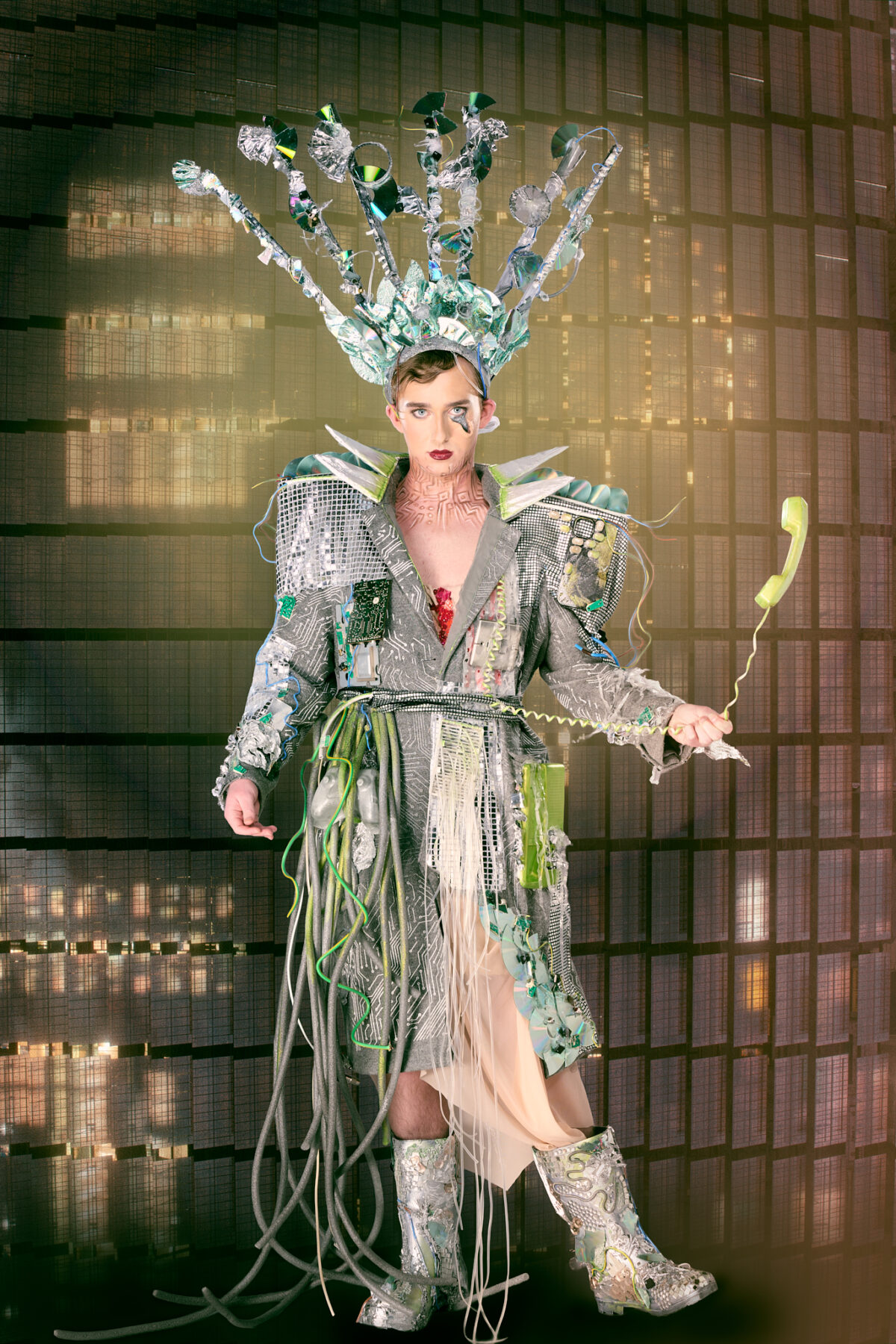
‘The film is a vision of the future where everyone lives in a giant size metropolis and the rest of the world is left to rewild; climate issues are resolved and there is a world of, I guess, utopia’. Adele contacted the filmmaker for permission to use it as a springboard for the unit, and even got permission to use imagery as a background for the final project photography. ‘It’s a city where everything is being rebuilt into a new haven,’ student Lucy Murray explains. ‘The idea of these costumes is that they’re called history-walkers, and they walk through this city warning people away from what’s happened in the past.’

The students worked in groups to conceptualise and then execute designs inspired by forest fires, rising sea levels, plastic pollution and more. Sofia Mols, another student and sustainability rep for the costume course, was part of the group exploring overconsumption, creating a costume blending natural and man-made materials into a decrepit vision of waste and industrialisation. Lucy Murray’s group created a repentant oil company CEO ‘that was given a sentence to walk around and tell people of the awful things they’d done,’ complete with shackles and loom oil-rig headpiece.
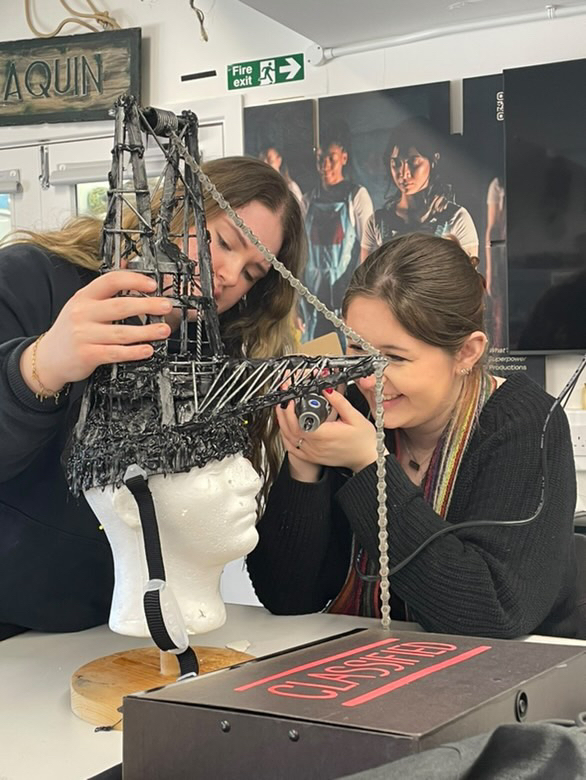
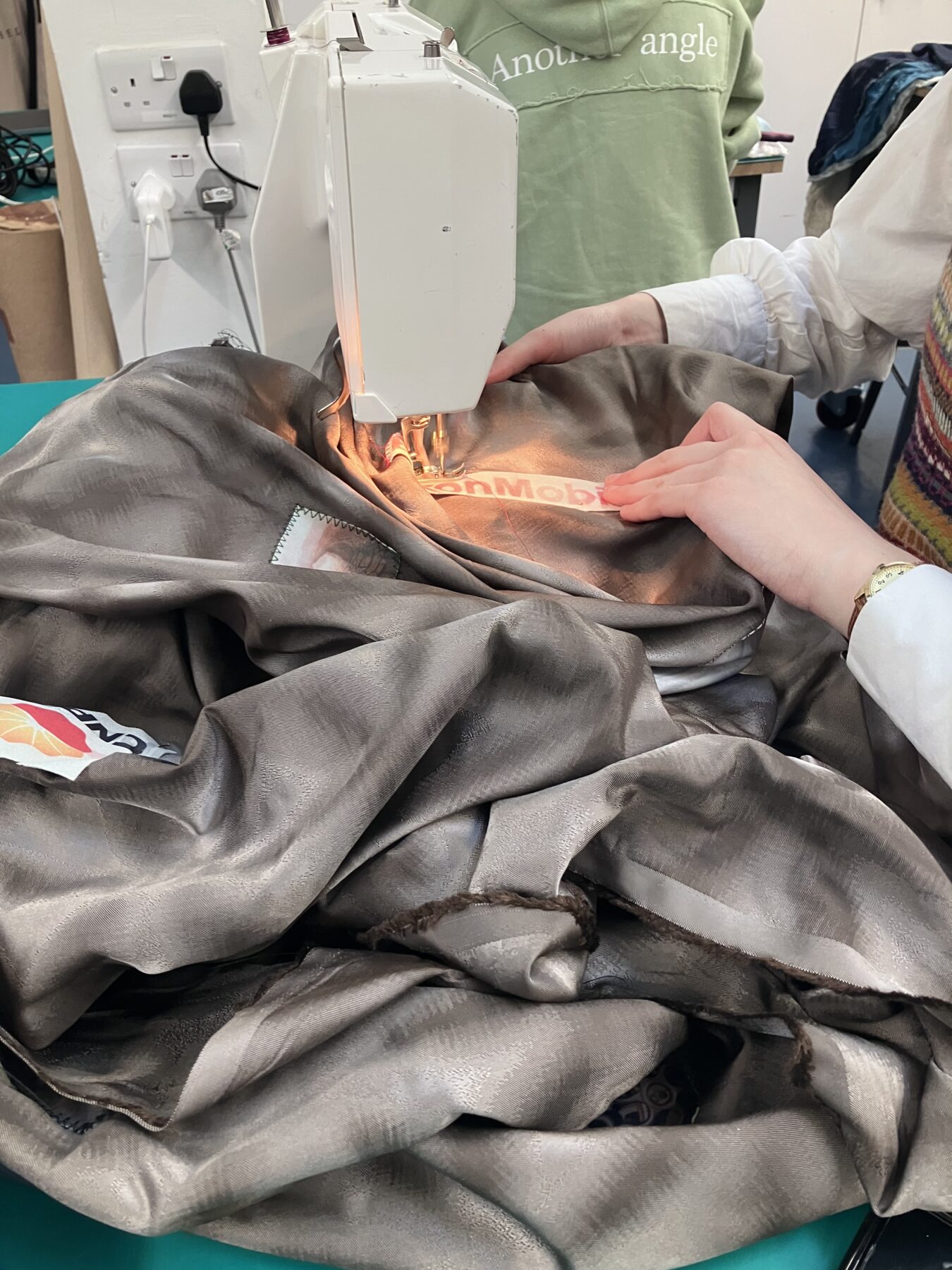
‘Everything was sustainability-focused, from the making to them to where we got the materials,’ Lucy continues. Having worked with sustainability and albert’s tools hypothetically in their first years, the students were using real-world application on this unit, including educational trips to recycling centres to source materials that influenced the designs’ development. Sofia explains, ‘at uni we were taught in first year to make a drawing, then get fabric samples, and it had steps. With this it was more organic; you find something and weave it into the design.’ This is a slightly unusual process for the course but, as Adele explains, ‘sometimes it opens up ideas. The headdress [for the oil rig costume] was an ornament of a lighthouse they found at the recycling centre, and that’s where the whole idea came from’.
Following the completion of the projects, the costumes have been showcased at the Green Party conference in Bournemouth, as well as the Dorset COP where Adele gave a talk about climate conversations through clothing. And the course’s plans don’t stop there. ‘What we’re planning to do with the course this year is the counter argument: to do the aspirational. Maybe in Future City, they send images back to the past of what the future looks like and what it can achieve,’ Adele tells us. ‘You can get fatigue in climate and sustainability, so it’s really important to have that counter argument and conversation, and see the aspirational as well as acknowledge the darkness’.

When asked what they would take away from the albert module and Design–Led Futures into their practice, Lucy reaffirms that reframing practices sustainably can offer opportunities. ‘It just opens your eyes to what you can do with not much budget; you don’t have to buy things brand new and there’s so much stuff out there you can make use of’. And it’s about maintaining the discipline to think creatively; Sofia explains that it’s ‘sometimes doing the hard work. If you’re stressed and in a short timeframe, it’s very easy to just choose the easy option. But I feel like this has taught me to consider the other options and make informed decisions, rather than just snap quick easy ones’.
The BAFTA albert Education Partnership, at its core, is about developing these very problem-solving skills and embedded sustainable mindset in students’ creative practice. Encouraging these creative attitudes will stay with students after they graduate and become the work force of the future – and it even excites many. ‘As an intern you don’t have the power to change everything, like when I’ve seen something that could be more sustainable,’ Sofia says, speaking of her own experience. ‘I would love to work myself up to the point where I can have impact on that.’
Photography by Ed Hill, MA Photography