Posted on 11th December 2025

SPARK: Clean Temporary Power by 2030

SPARK: Clean Temporary Power by 2030 is the industry’s roadmap for a permanent shift to clean solutions for temporary power, developed in 2025 through research and consultation with industry stakeholders’ energy experts and validated by independent experts from Imperial College London (via Imperial Consultants). It is accompanied by an industry Statement of Intent to accelerate sustainable screen production practises in energy use. 
 
SPARK lays out a practical and collaborative plan to transition the UK’s film and TV industry away from fossil-fuel generators and towards cleaner power solutions, without compromising creativity or production quality.
Why SPARK Matters

The need for SPARK could not be clearer. In 2024, UK productions burned over three million litres of fossil fuels in generators, and more than half of all productions relied almost entirely of fossil fuels. SPARK is the UK’s film and TV industry’s roadmap, supported by a unified vision set out in a Statement of Intent to change these practises and transition to clean temporary power by 2030.  

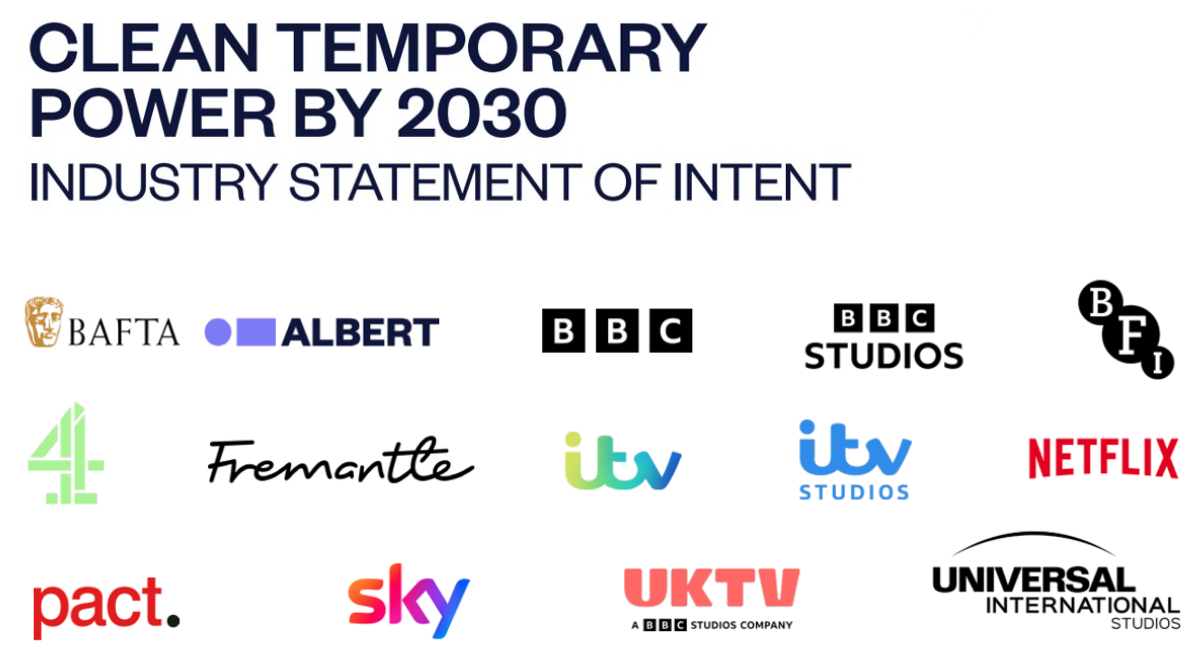
To date, the Statement of Intent has been signed by BAFTA albert, BBC, BBC Studios, BFI, Channel 4, Fremantle, ITV, ITV Studios, Netflix, Pact, Sky, UKTV and Universal International Studios.

The Statement of Intent reads “The UK film & TV industry faces an imperative: to modernise its operations, and in doing so, seize the opportunity to tackle a significant source of our emissions.” 

“For decades, the standard practice of using fossil fuel generators to power productions has been among the most environmentally damaging aspects of film and TV production, directly contributing to carbon emissions, noise pollution and poor air quality. 

“We share a unified vision to achieve Clean Temporary Power by 2030.  This vision is about creating a better, more efficient, and more sustainable future for screen production in the UK.” 

What’s in SPARK?

SPARK builds on the foundations laid by initiatives such as A Screen New Deal: A route map to sustainable film production (2020), Screen New Deal: Transformation Plan for Wales (2023), The Fuel Project II: The Shift (2024)ACCELERATE 2025 (2025). 

The publication outlines the need to phase-out fossil-fuels and stand-alone generator use before 2030, transitioning via hybrid generators and hydrotreated vegetable oil (HVO) fuel, where necessary, and to phase-in grid power, battery solutions and other clean technologies, to make meaningful environmental changes.  

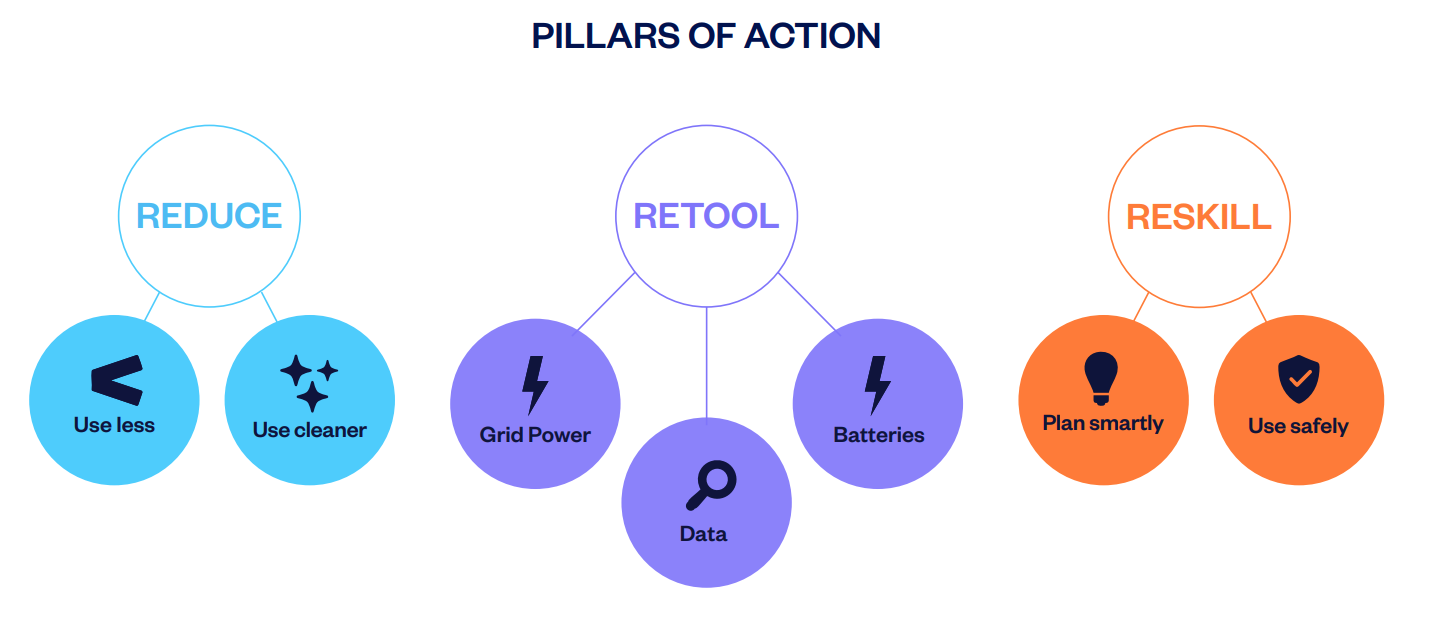
SPARK has identified three pillars of action that will guide the film & TV industry’s transition to clean temporary power by 2030. These are REDUCE (cut energy demand and emissions through efficient planning and equipment), RETOOL (upgrade infrastructure and technology for clean power), and RESKILL (equip teams with knowledge and training to plan, budget, and operate clean power solutions). 

Download SPARK Now